


Like many bubble-dwellers, on Friday I awoke to an email from someone called Brian Morris.
“I wanted to write to you personally,” the very obviously not-personal email began. “I have signed an agreement with David Lloyd Clubs that will result in a change of ownership.”
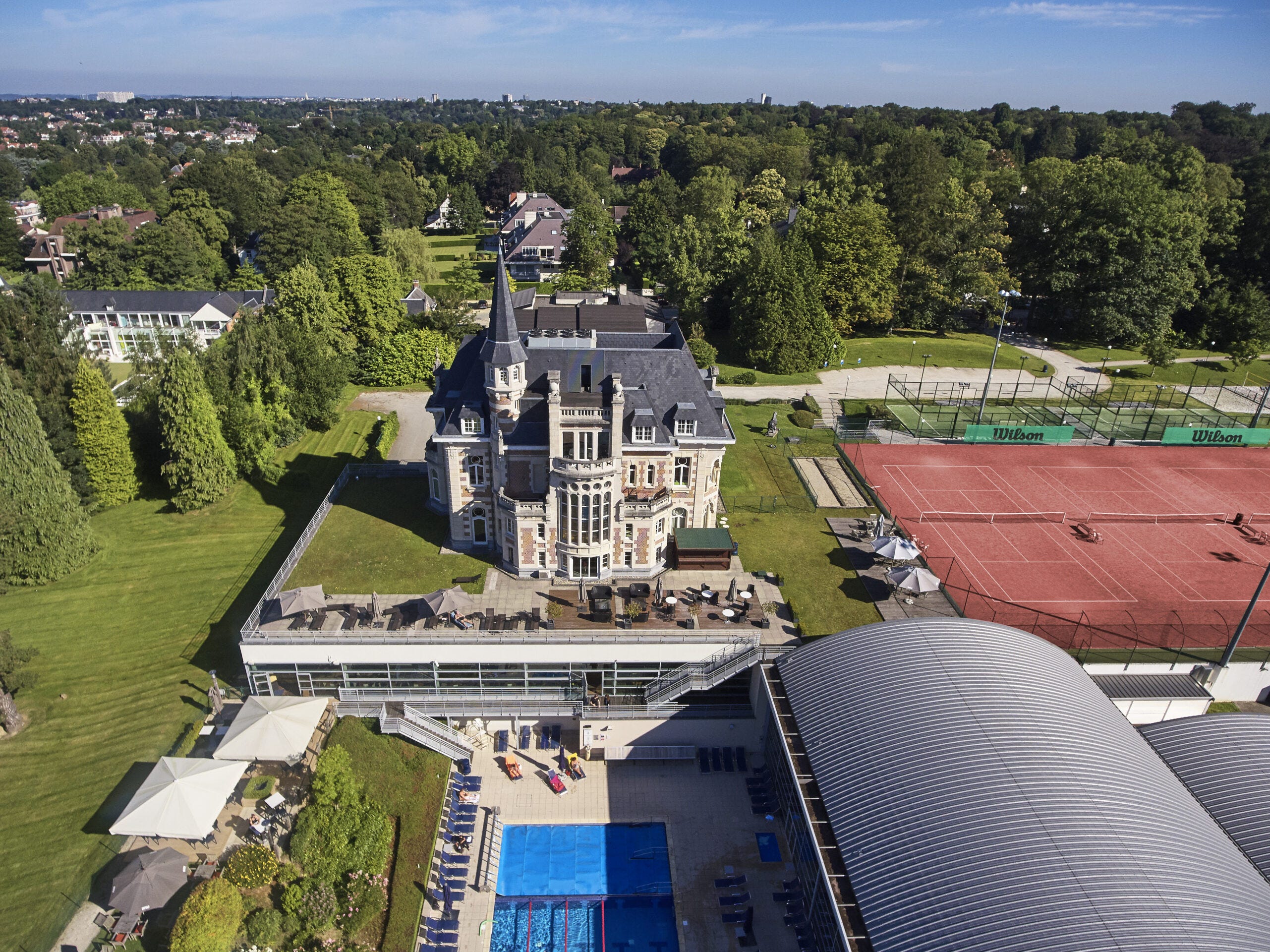
Morris is the British property magnate behind Aspria, a chain of three luxury, family-friendly gym and spa complexes in Brussels much frequented by EU policy rats. My family and I are members, along with half of DG Competition. I suspect the other half are members of David Lloyd, which operates the other two luxury, family-friendly gym and spa complexes in Brussels.
That’s the problem: in the market for luxury, family-friendly gym and spa complexes in Brussels, this deal is a two-to-one. David Lloyd certainly seems to think Aspria is its competition, which is presumably why it has bought up all the bus-stop advertising boards around Aspria’s flagship site.
And if there’s one city where customers of luxury, family-friendly gym and spa complexes are likely to take offence at such a brazen two-to-one, it’s Brussels.
Defining the market
The reason I keep repeating the phrase “luxury, family-friendly gym and spa complexes in Brussels” is because that’s what the case law and practice suggest the market definition might be. Or, more specifically, the bits of Brussels Eurocrats tend to live in.
Back in 2003, Virgin Active — a UK gym chain — bought its rival Holmes Place. In a decision signed off by Mario Monti himself, the Commission decreed that no matter how narrow the market definition, the concentration didn’t pose a problem. But it did the work of figuring out how they might define it if they needed to, and repeated the logic a decade later in a similar Swedish case.
What those decisions show is just how narrow a market definition can go in this sector. There are essentially four dimensions: public vs private ownership, geography, cost, and facilities.
Both Aspria and David Lloyd’s clubs are privately owned, operate on a membership model, and are hideously expensive. If I just wanted a gym membership, I’d pay Basic Fit €35 a month and use the one round the corner. I’m almost embarrassed to admit that my wife and I pay over €230 a month each (plus VAT) for access to two of Aspria’s three Brussels sites.
There are two reasons I allow myself to be subjected to such brazen daylight robbery.
First, we like our gyms fully equipped with pretentious accessories like yoga classes, pools, saunas and steam rooms. And second, we have a delightful toddler who needs looking after while we use those facilities and who, as she grows up, will require her own pretentious luxuries like summer camps, swimming lessons and possibly tennis classes.
My wife is a recovering competition lawyer who now works at the Commission regulating banks. I’m a career lobbyist who has only recently discovered the joys of the EU’s competition bubble. We’re Brussels lifers with small kids slowly coming to terms with the fact that we don’t fit in at Place Lux on a Thursday any more.
Many people in the EU bubble are part of the same demographic. When we look for gyms, we want what we want and are prepared to overpay for it.
I am neither young nor pretty enough to join Animo, the Instagram-friendly fitness start-up near the Berlaymont. But even if I were, they don’t have a pool, kids’ facilities or tennis. World Class has a pool but no spa or kids’ classes. Jim’s is out for the same reason as Basic Fit: it’s a budget option without the requisite creature comforts. Mix doesn’t have tennis courts and is essentially a destination hotel, and Waer Waters is the same but with a nudist spa tacked on for good measure: not somewhere you take your 18-month-old.
So what do pampered Eurocrat families do? We shell out for membership at one of the three clubs to the east of the city (let’s be honest, none of us live in Molenbeek) that tick all the boxes: David Lloyd Uccle, David Lloyd Sterrebeek or Aspria Royal La Rasante.
Closer to home?
In a few months there will be another Aspria in Bois de la Cambre. That means both David Lloyd sites will be within a 15-minute drive of an Aspria site: Sterrebeek from La Rasante and Uccle from Bois de la Cambre.
That’s not good news for the deal. In 2024 the Spanish enforcer, the CNMC, approved Basic Fit’s takeover of the operator of the Holmes Place franchise in Spain. It cited the 2003 Commission decision and concluded that, in the outskirts of a city, a gym’s catchment area was be defined as a 15-minute drive. It didn’t matter in Madrid because the market was highly fragmented and Basic Fit wasn’t active in the premium segment. Brussels is essentially a duopoly.
David Lloyd could argue that the 15-minute walking catchment used for city centres should apply here (which would remove Aspria’s sites from the analysis), but that’s somewhat undermined by the massive car parks at all four sites. Making it a little bigger doesn’t help much either: you add Mix and maybe World Class at a stretch, but those cater to people without rugrats to entertain.
I suppose they could argue that the 15 minutes includes Brussels traffic, which inevitably takes the timing above the threshold.
But does it really matter?
My wife is from Madrid and I’m from London. Real estate and living costs are higher in both cities than in Brussels. So to get a sense of whether we’re getting ripped off, we looked at David Lloyd pricing in our home cities that we found online (imperfect, admittedly). A monthly family membership in comparable out-of-town locations in either Madrid or London is about 10–20% less than what we currently pay for Aspria. (No, I’m not factoring in the Mayfair one). Aspria doesn’t have sites in either location.
(High-end gyms don’t publish their prices, so I relied on the best research my premium ChatGPT subscription could muster. Don’t @ me.)
We’re told by our pampered friends at David Lloyd that their Brussels pricing is even more outrageous than at Aspria. If the duopoly is already ripping us off, it’s hard to imagine prices becoming more reasonable after a merger. Luxury gyms have high gross margins, low marginal costs per additional member and a fixed-cost structure. Even a small reduction in competitive constraint might sustain meaningful price increases.
A new player in town?
But surely that would tempt entry? Maybe. But it took me a year to get permission from Brussels 1000 to regularise a loft conversion in a small apartment. I doubt it gets easier when you’re building a spa complex.
And even when you get permission, good luck finding half-decent builders who turn up on time. Take a look at Schuman roundabout to see how major construction projects tend to go here. It would take at least five years for a competitor to open its doors.
But what can we do?
Fortunately for the parties, the deal almost certainly doesn’t meet the thresholds for notification under the EU Merger Regulation. That must be a relief, because any case handler would almost certainly be an overpaying member of one of these gyms, just as I am. We’ll never know whether that membership would constitute a conflict of interest under DG COMP’s rules.
Nope. This one will go to national enforcers which, for the Belgian part of the deal (Aspria also has German and Italian businesses), means the Belgian Competition Authority. National enforcers are particularly alert to deals in small geographic markets, and I dare say there are one or two health-club users over there too.
And perhaps there is a way the Commission could intervene after all. Both David Lloyd and Aspria offer special rates for Commission staff. I have no data, but I’d wager 15–20% of members are EU institutional folk.
The institutions might reasonably worry that, absent competition, the merged entity would decide it no longer needs to offer pampered Eurocrats a small discount on their outrageously expensive gym memberships. If so, the Commission would be perfectly entitled, as a customer, to lodge a complaint.